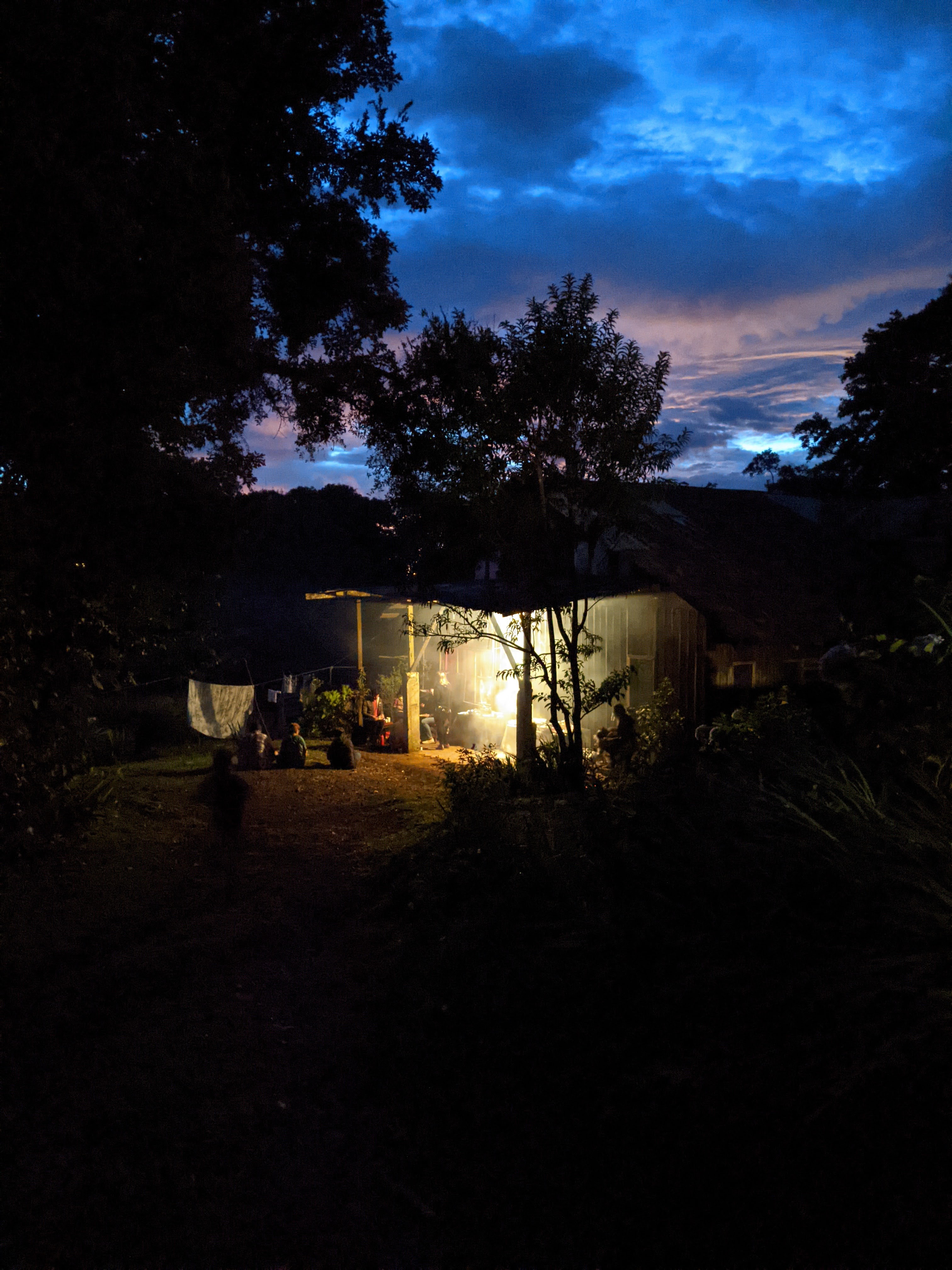
Yesterday at frisbee, I slid in the wet grass, rolled my ankle, and heard a little “pop!” I managed to hobble off the field propped between Ethan and another attentive teammate. And since then, I’ve been icing, resting, elevating, and trying to keep any weight off of it by using the crutches a friend was able to dig up at the school. Though my ankle is still very swollen, it hasn’t gotten any worse and — thankfully! — it looks like I can avoid a trip to the clinic two hours away by car — the only place to get an x-ray. For now, I’ve been collapsed in the recliner getting some much needed R&R.
In many ways, our life here is much slower and simpler than in Philadelphia. We don’t have a lot of commitments, or a calendar full of meetings, soccer games, practices, or birthdays — at least not yet. And yet, most nights we crawl into bed, exhausted. Despite the slower pace, we’re going hard. We live at high altitude and life on the mountain consists of much more walking: steep, muddy trails and rocky roads. It’s been convenient to have a car, but driving also requires being on high alert to avoid bottoming out in the pot holes that are only getting worse in the rainy season. And while our house is comfortable and the sunset views beautiful, we are missing some basic amenities that make life at home more manageable. It took us a month to make it to the big box store two hours away — the closest place where we could buy a dish drainer.
Life in two languages adds another level of fatigue. While I teach in English, I speak to colleagues in both languages, and use Spanish when in town and traveling. Switching between the two can be tricky, and often leaves me feeling like an idiot. Even my seasoned, bilingual colleagues sometimes forget mid-sentence what language they are speaking in and unconsciously begin speaking in the other. Teaching is joyful, but I haven’t quite entered the flow; lesson planning for the puppy dog energy of my 7/8’s, the lethargy of the 9/10’s, and the engaged sophistication of the 11/12’s is a rompecabeza that requires a lot of time.
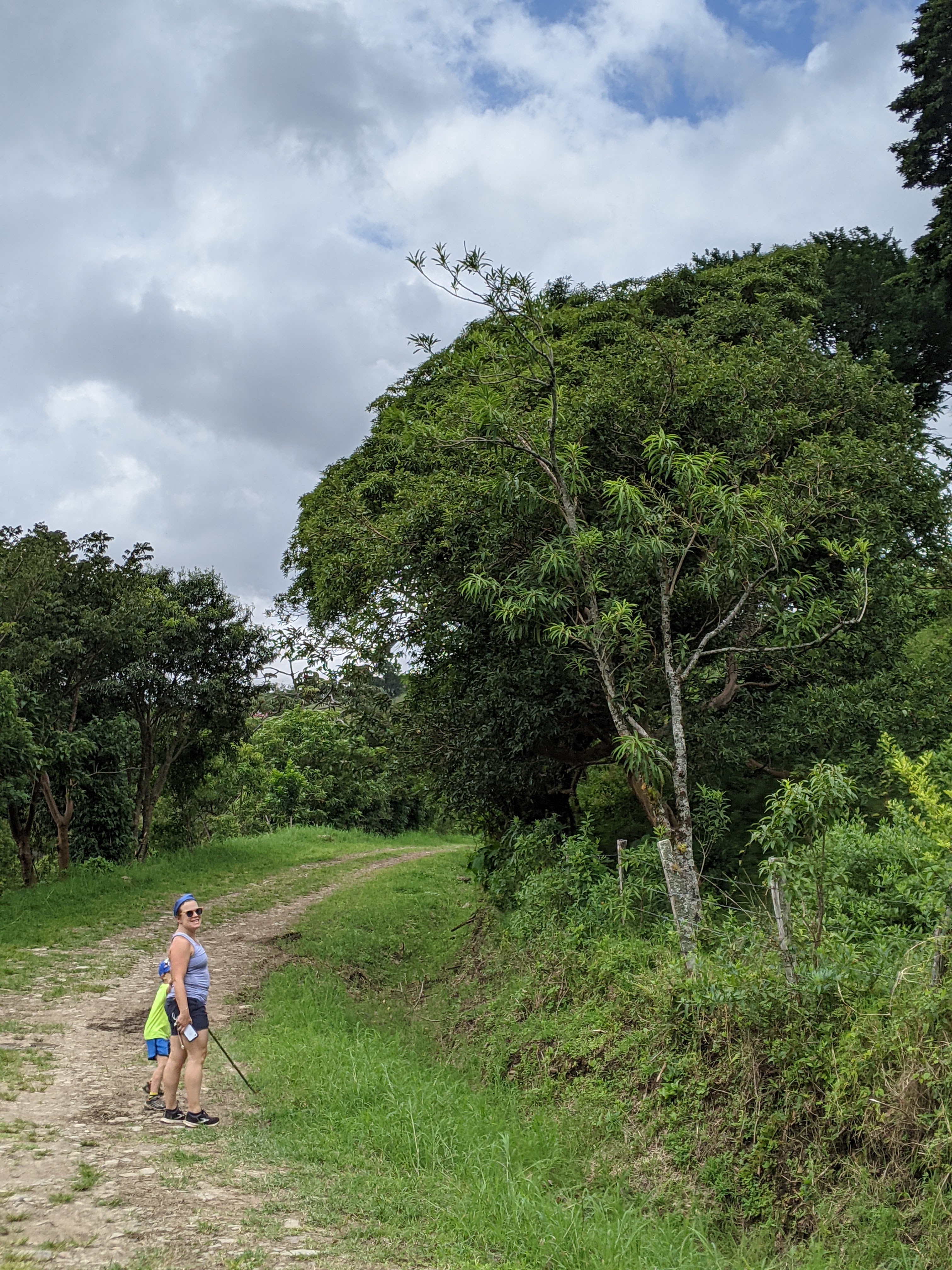
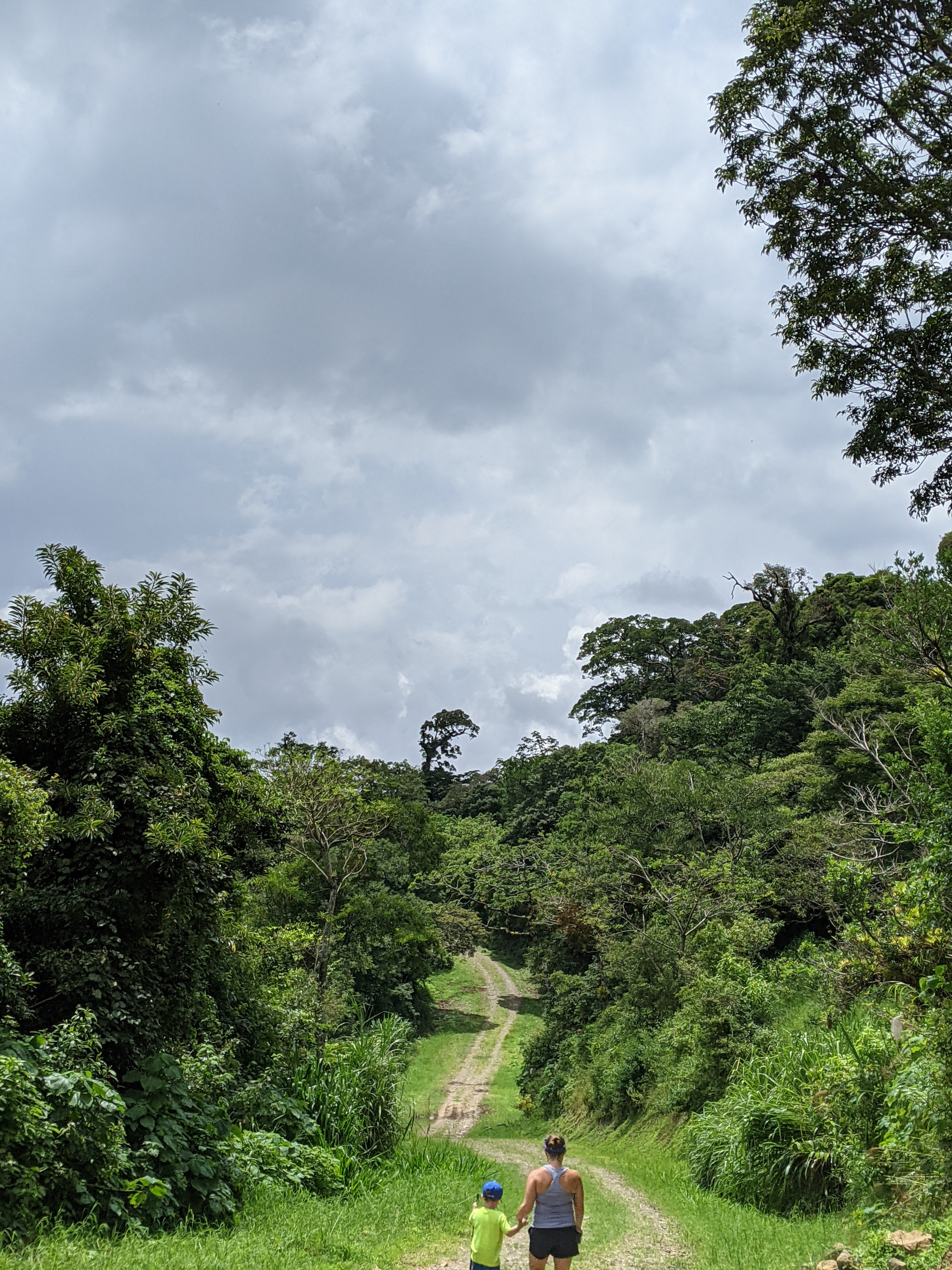
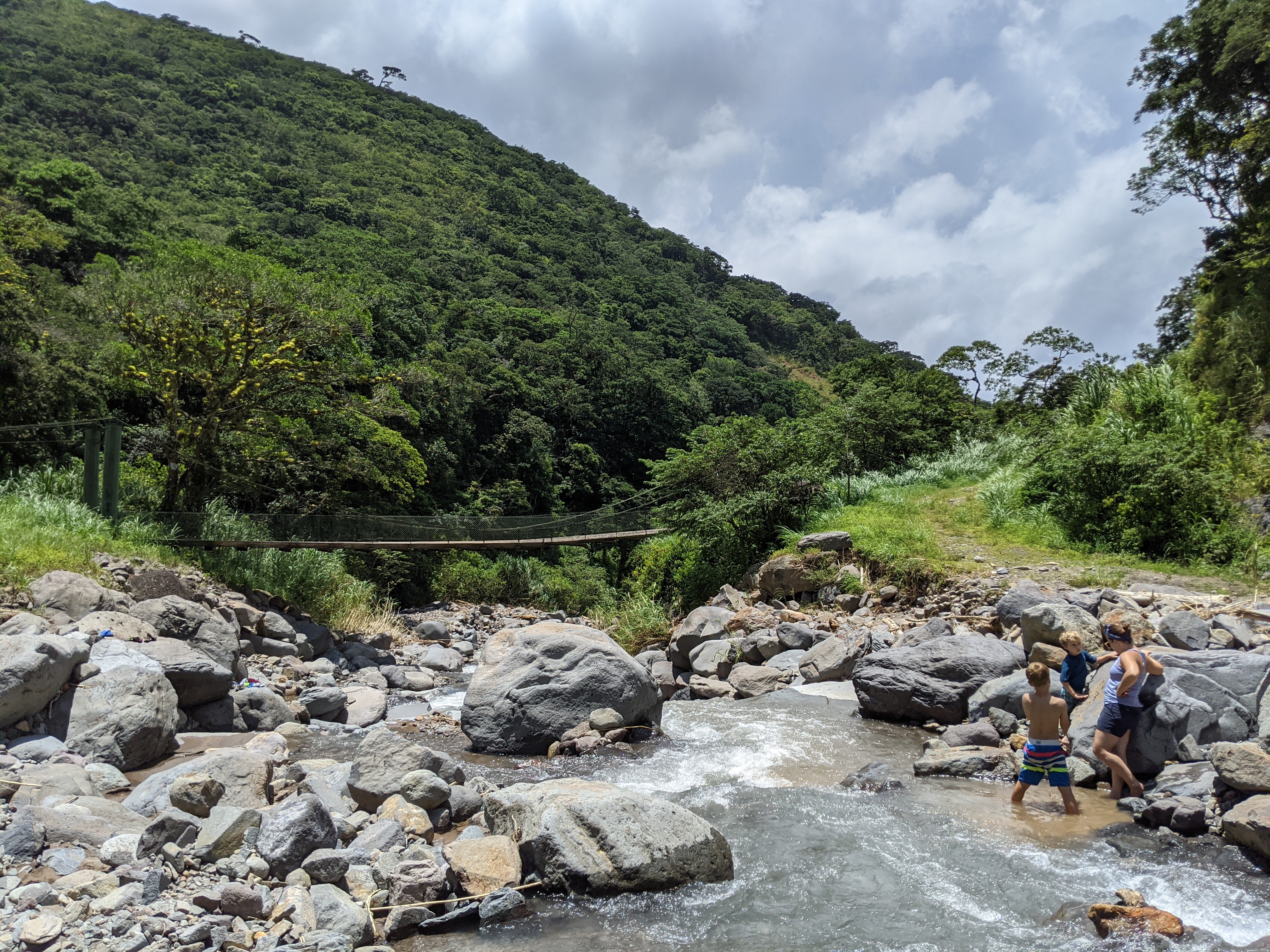
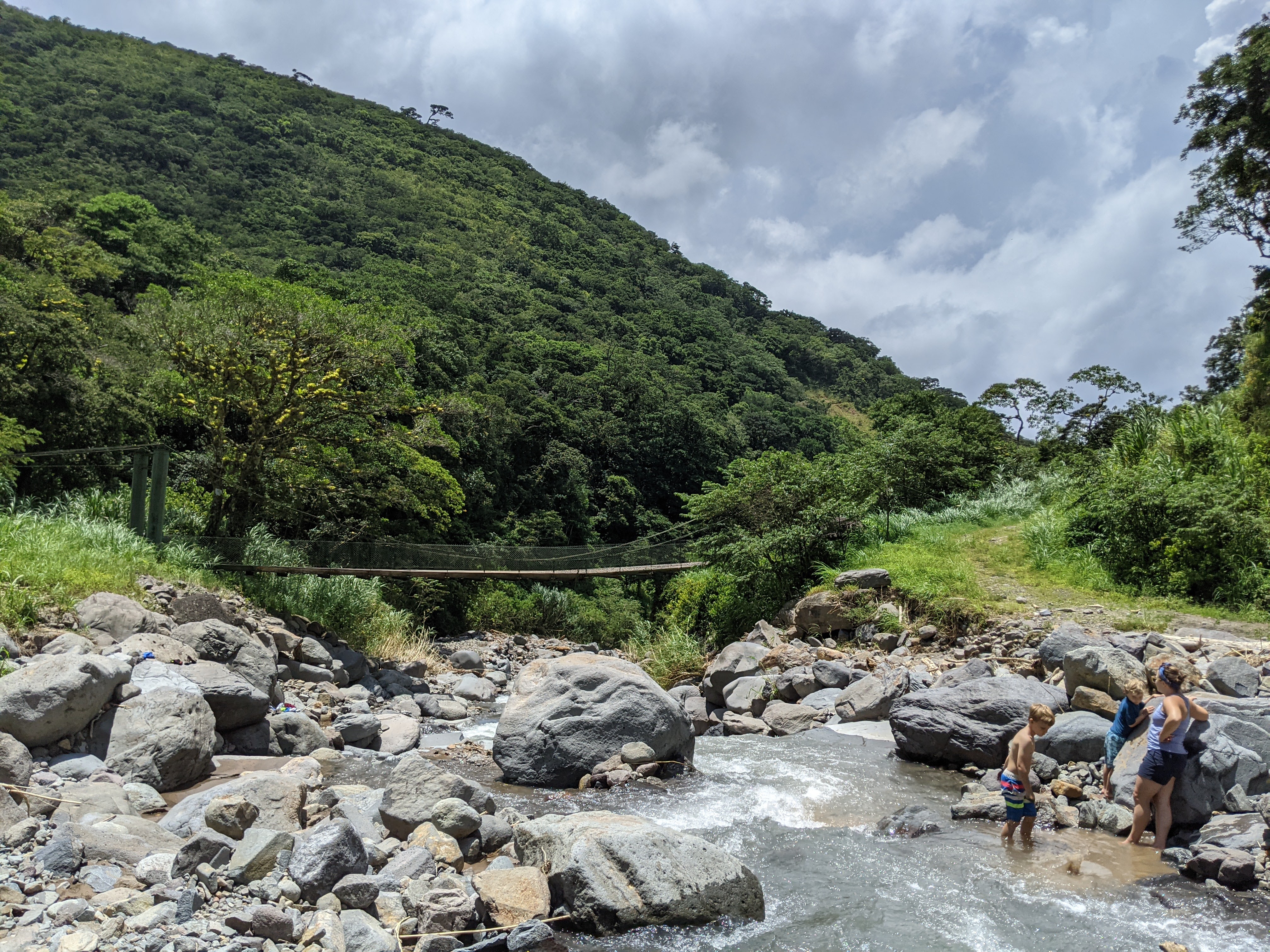
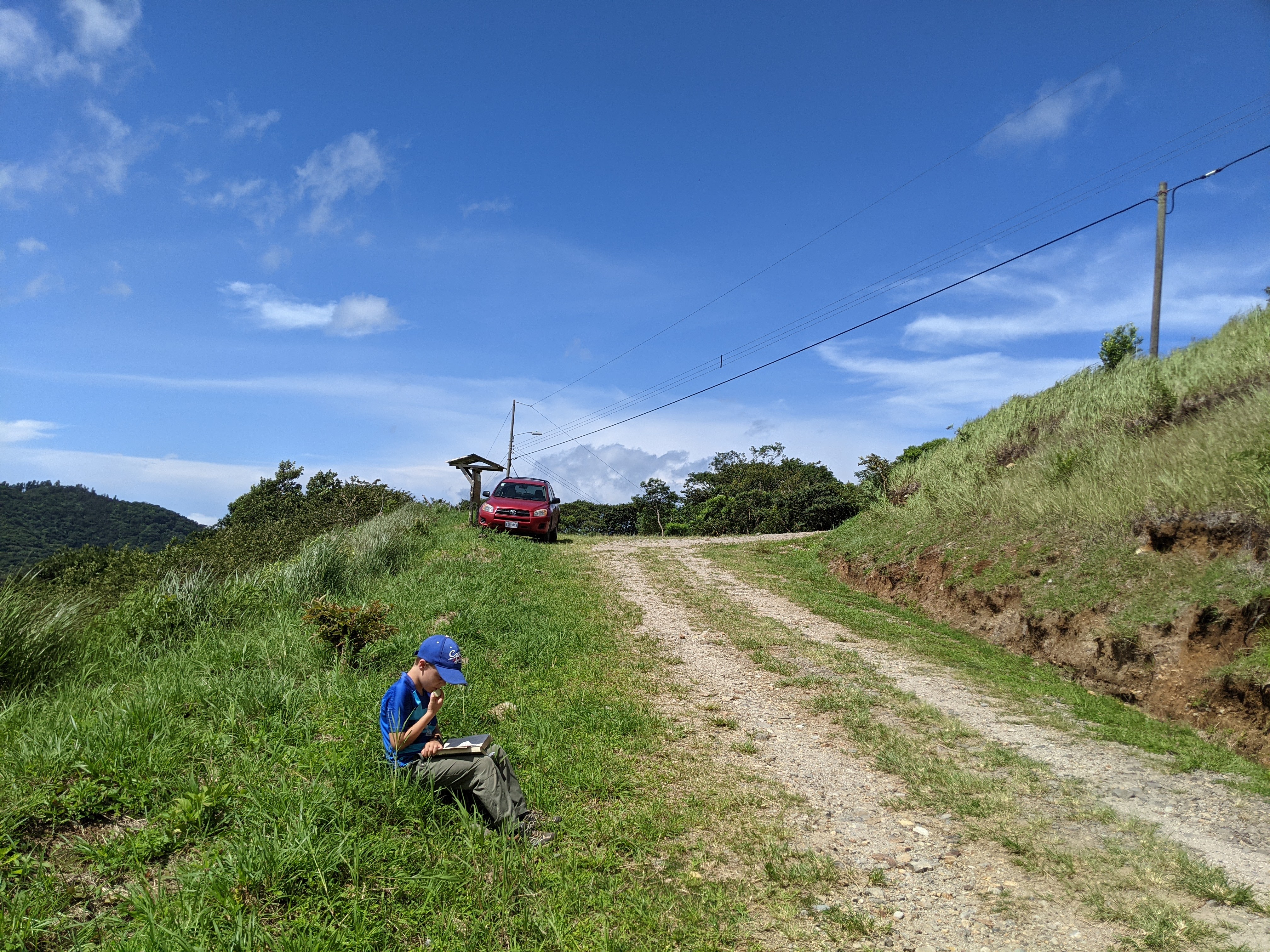
The particular little difficulties of life here on the mountain are not unique to me or to our family, and I am filled with awe at the individuals and families who seem to do more with less. At the same time, I’ve been aware of the many ways that this community can do so much only from their willingness to rely on one another, drawing on a web of generous resources. So much is shared: rides up and down the mountain, errands, food items, kitchen supplies, treats that can only be purchased in San Jose. And while life without easy, immediate access to all our needs can be inconvenient, it’s also a relief to get away from the rampant consumerism and waste in the U.S. Last weekend, we went away on a trip to the Caribbean side of the country and after a few hours looking out at the roadside, traveling through both small towns and commercial areas, I realized that I had hardly seen a speck of litter. I couldn’t help but feel that this was further evidence of a a community, and a country, that feels responsible for one another. We continue to build connections here and make new friends. The boys have had several playdates with new buddies, and it’s been wonderful getting to know a bit more about the families who make up this community. Monteverde is a diverse little town, and many families come from a mish-mash of cultures and countries.
In many ways, Monteverde reminds us of Vermont. Most families farm, or come from a long line of farmers. On a recent playdate, Jude visited a friend who lives on a farm now divided between six or so families. While we were visiting, his friend’s father went and whacked down a piece of sugar cane that he prepared for us to chew on as the boys bounced around on pogo sticks and played ping pong. He and his wife described the tradition of juicing the sugar cane — a family, day-long affair that sounds a lot like making apple cider.
Last weekend, we traded our little mountaintop island, for the watery canals of Tortuguero. With a stop overnight in La Fortuna at a sweet little hillside pension, it took about six hours to get there. We parked our car at the pavona, hauled out our luggage, and then took the drizzly, hour-long boat ride to the long, Carribean barrier island — river canals and lush rainforest on one side, and the crashing waves of the Atlantic on the other. The little town of Tortugero was unlike anything we had seen so far in Costa Rica. The Carribean culture and the people, many of whom immigrated from Nicaragua, make it unique — and the wildlife, thanks in part to the lack of cars, was amazing to see.
As soon as we arrived at our hostel, luggage still in hand, we were treated to a view of a mama sloth making her way through almond trees with her little sloth baby holding on tightly to her chest; the only obstacle in being able to watch her uninterrupted were the noisy group of green macaws who were pelting us with tree nuts. Our host got out her flashlight and made sure we got to see the little boa constrictor curled up inside the hollow of a tree.
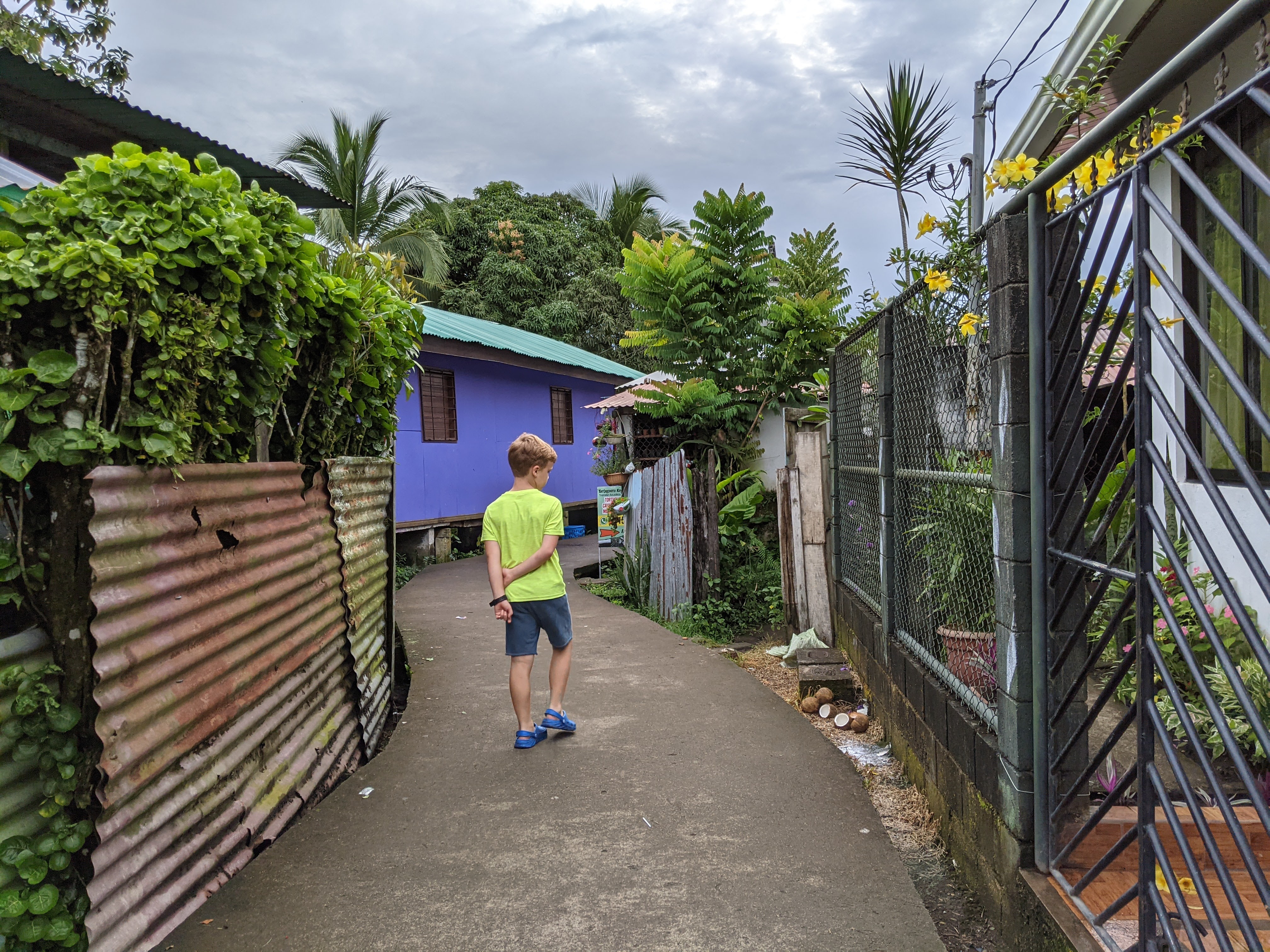
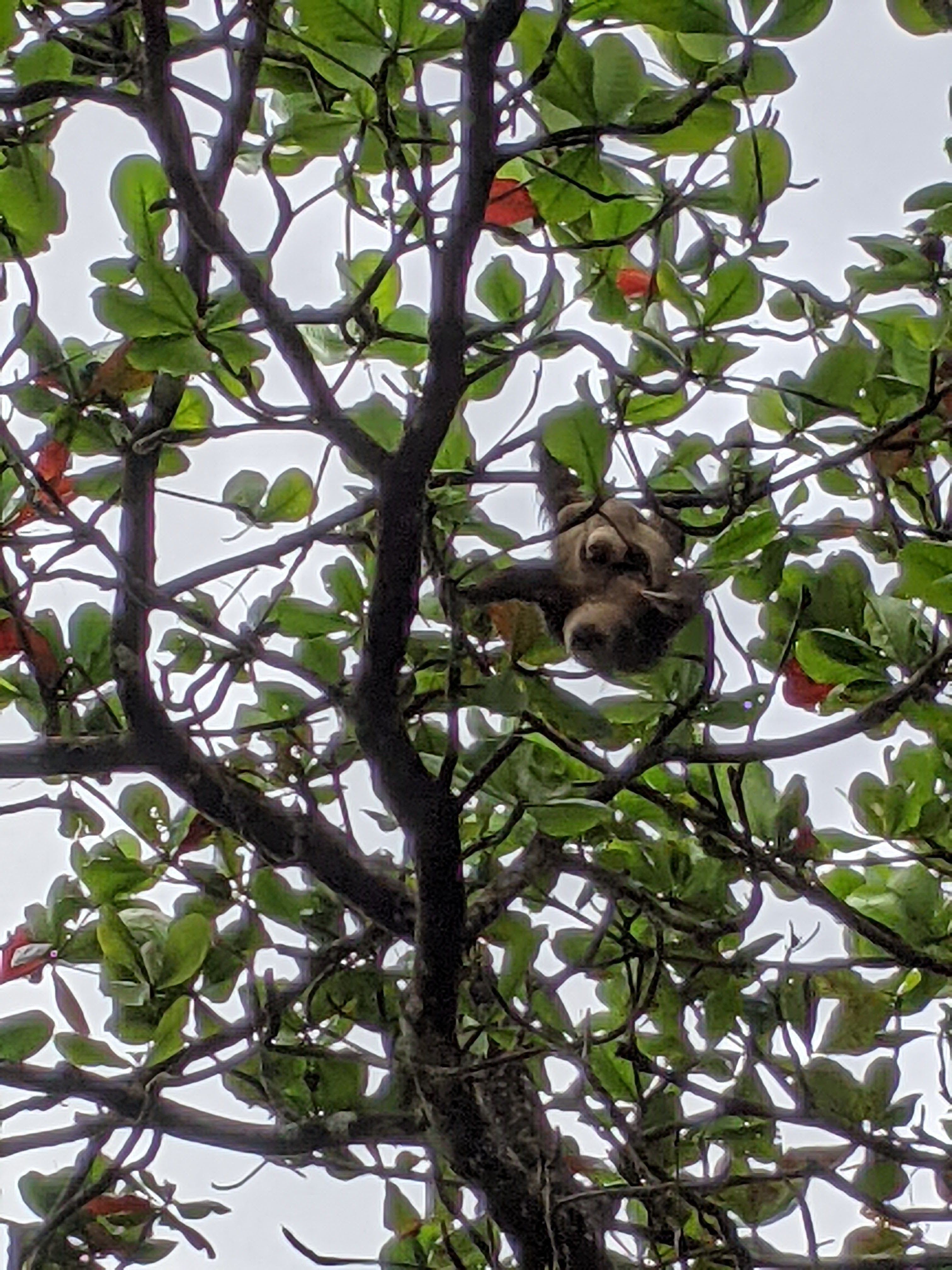
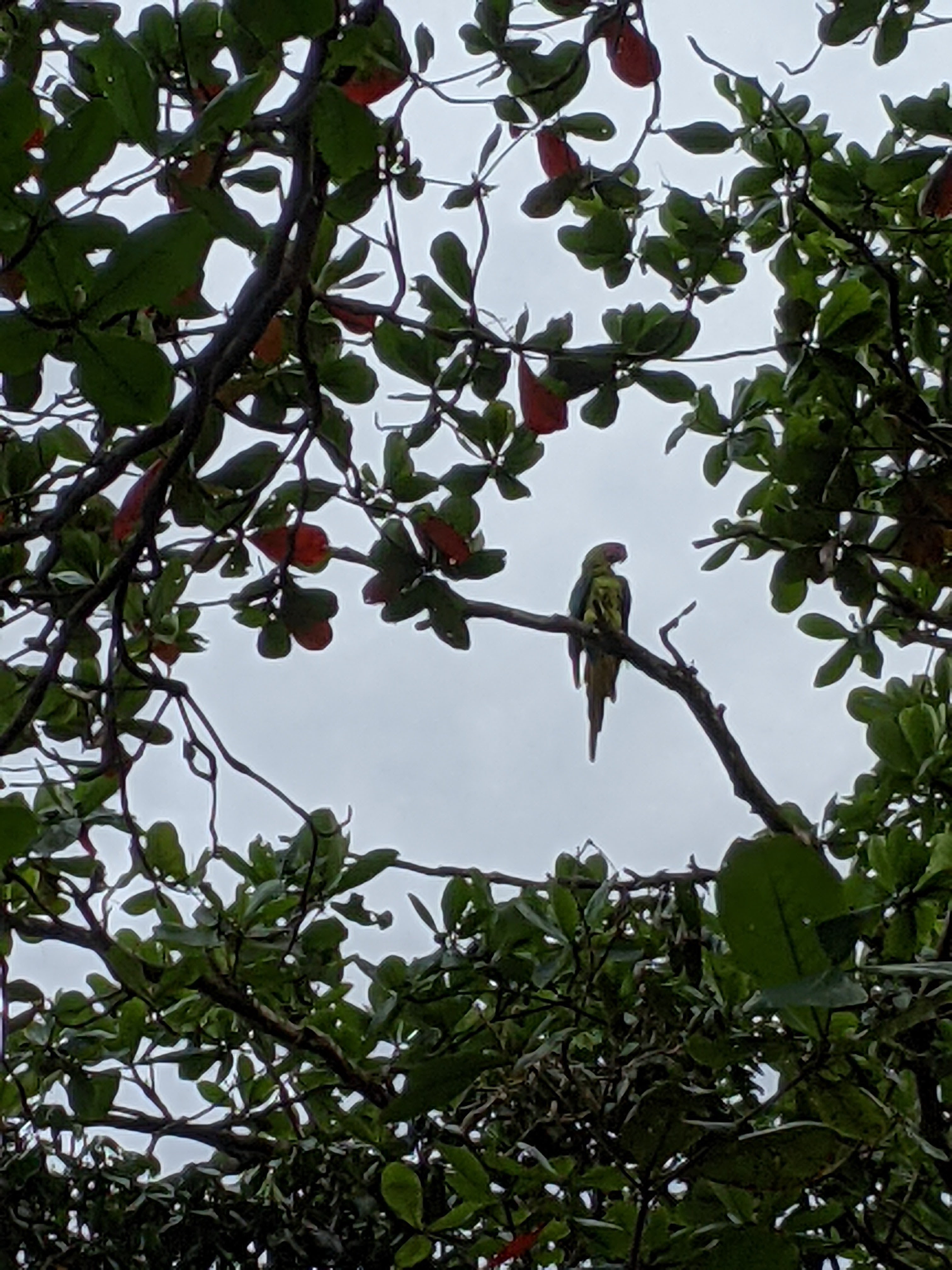
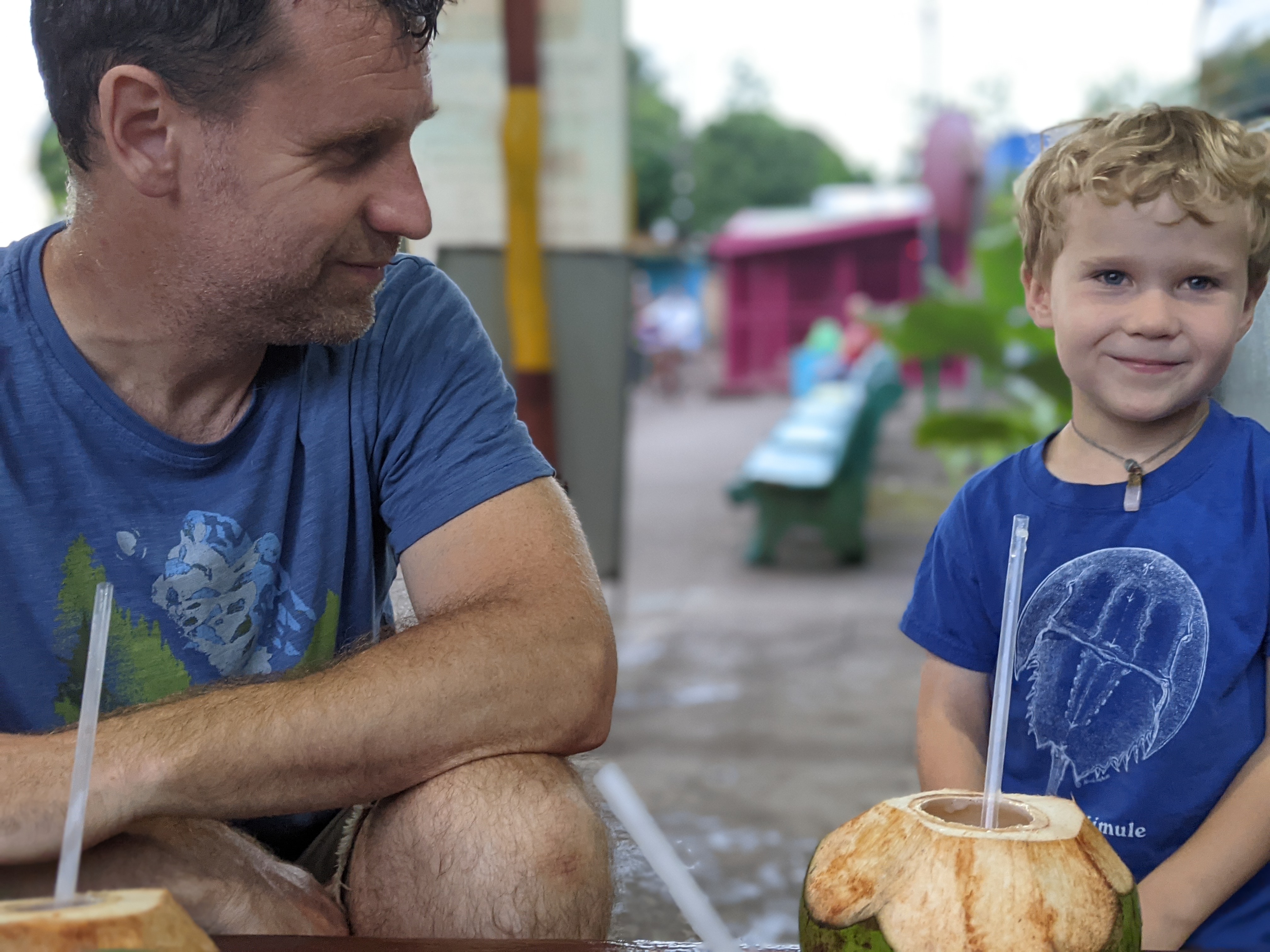
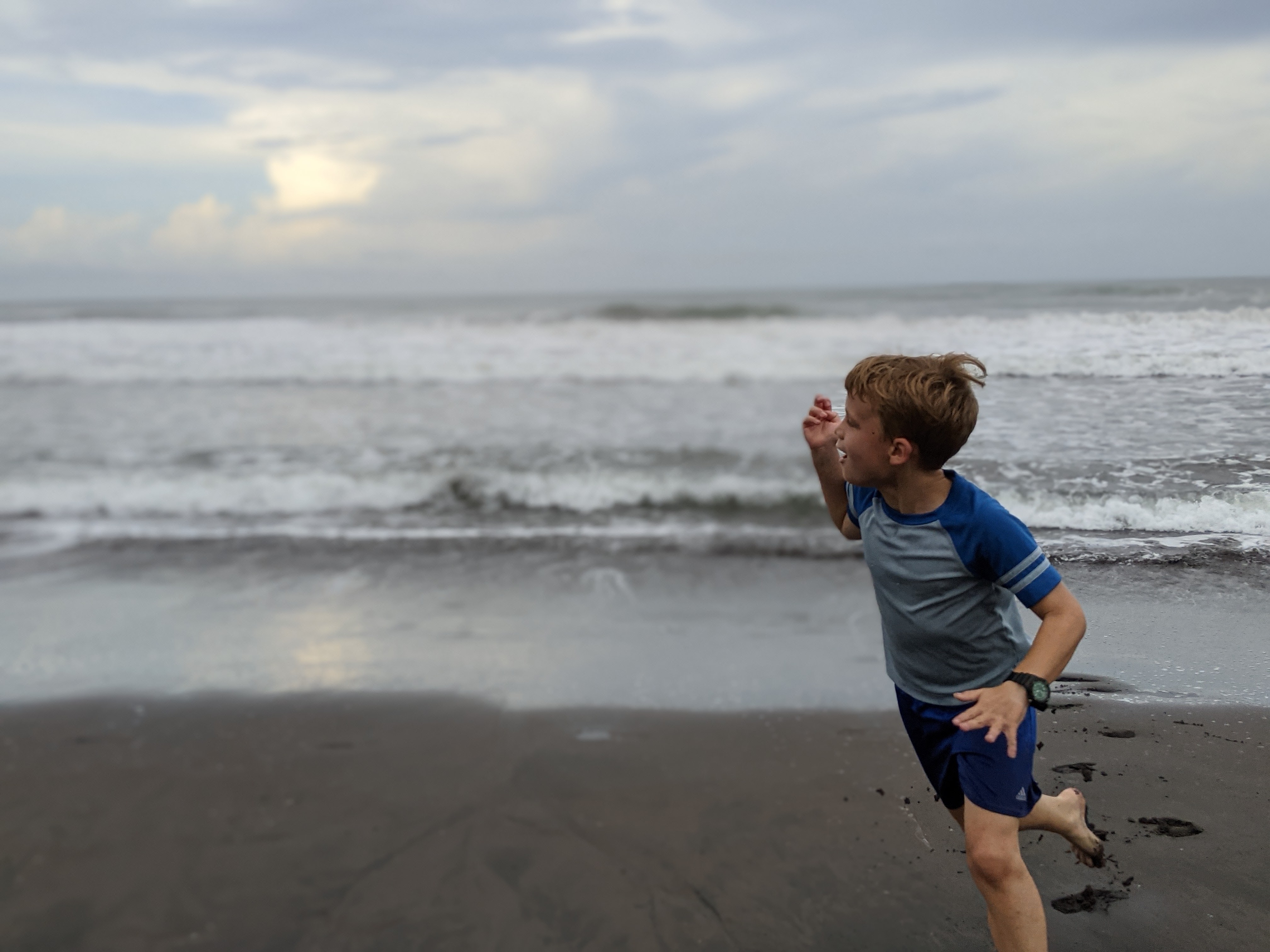
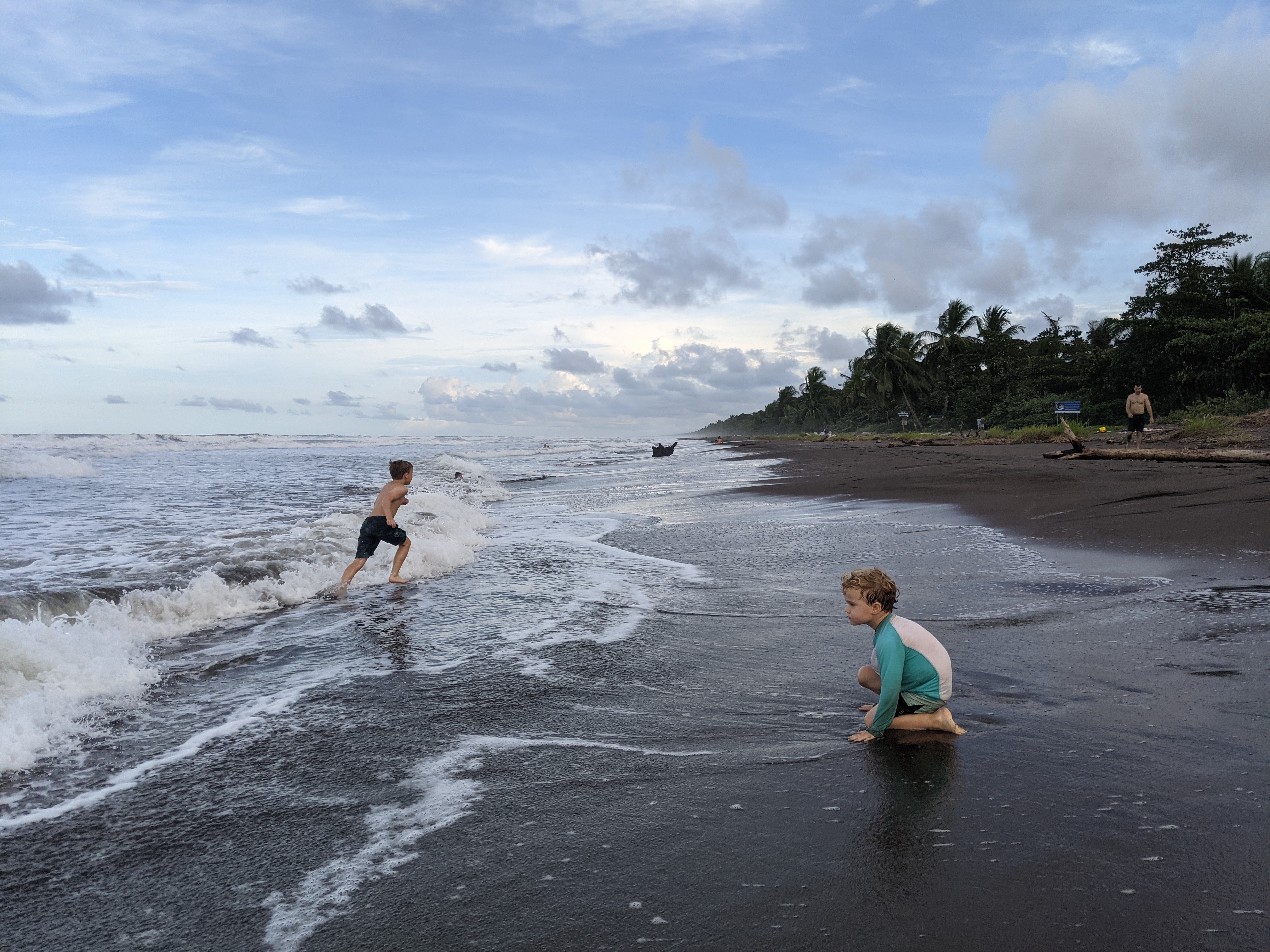
We spent two days exploring on the island, running through the waves playing frisbee (it was too dangerous to swim), eating ceviche and Caribbean dishes at the local sodas, and exploring. The first night we took a guided tour along the beach as the Green Turtles were currently nesting. Along with about two dozen other tourists, we walked along the beach with our guides, waiting for the park ranger to let us know when they had spotted one of the enormous Green Turtles. Using only a small red flashlight so as not to disturb or interrupt them, we went in small groups to see the 200 pound turtles digging their nests in the sand and laying their eggs by the hundreds. We didn’t get to see any hatchlings, but we did get to follow behind a mama as she dragged her way back into the ocean.
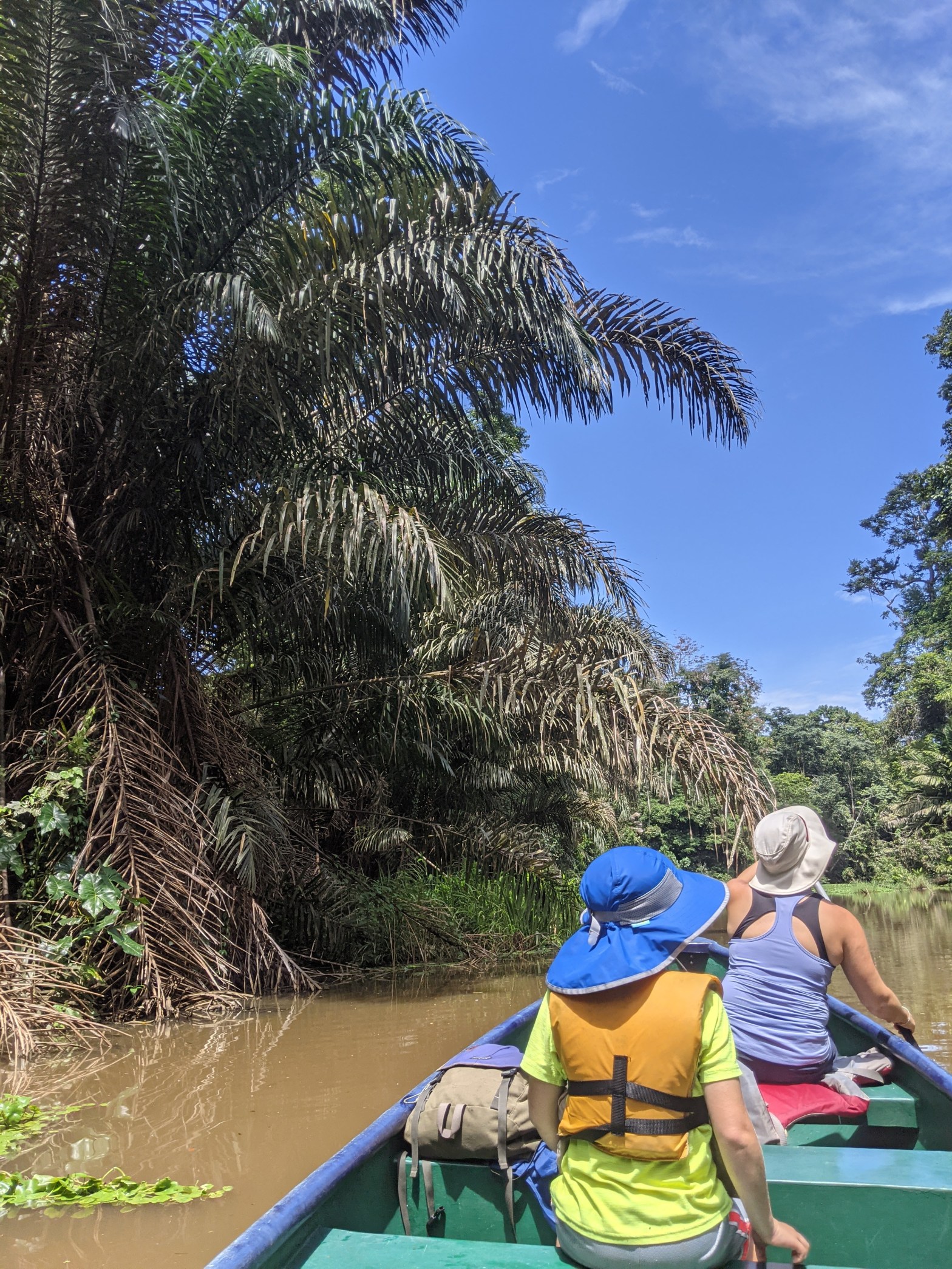
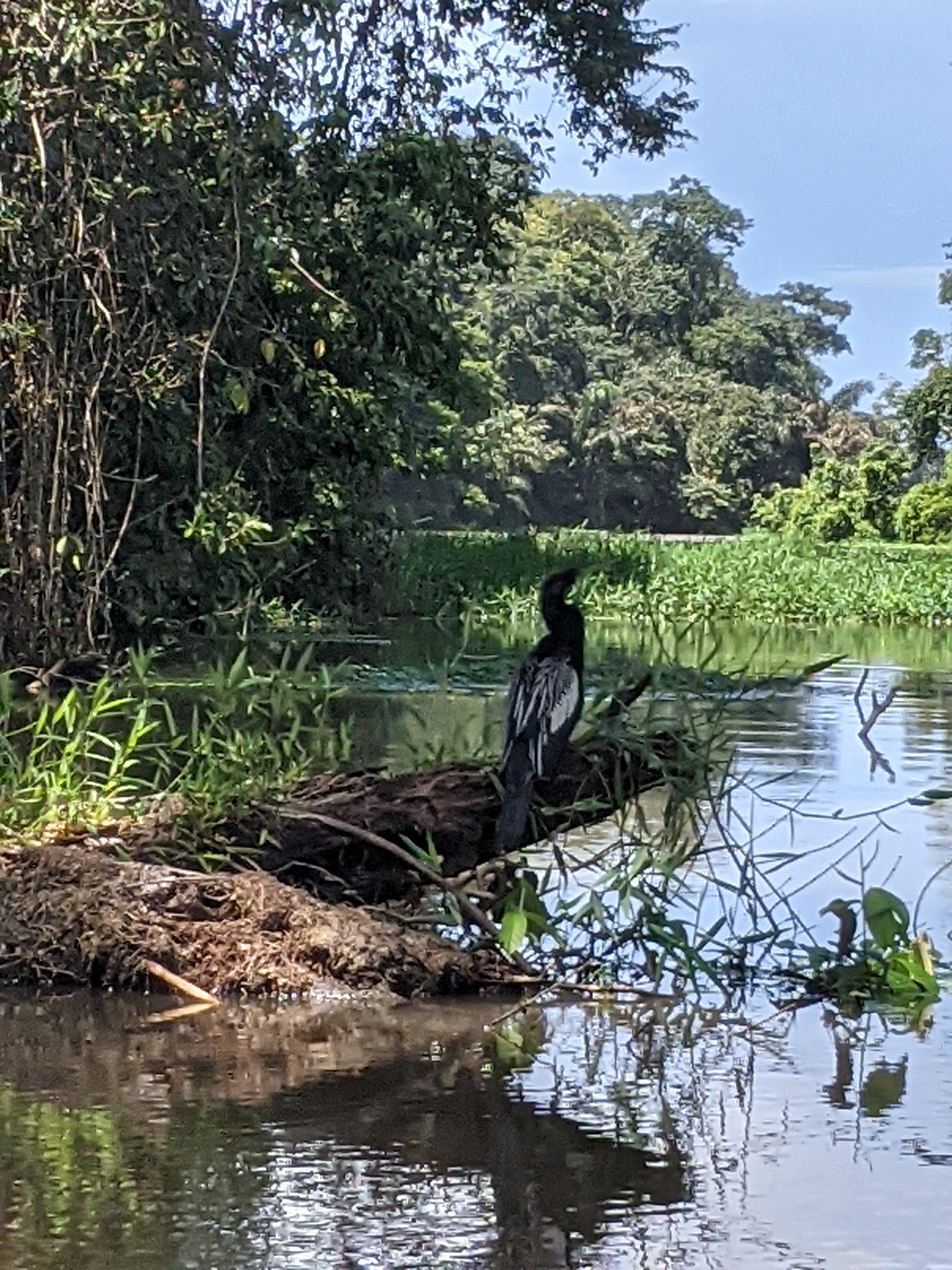
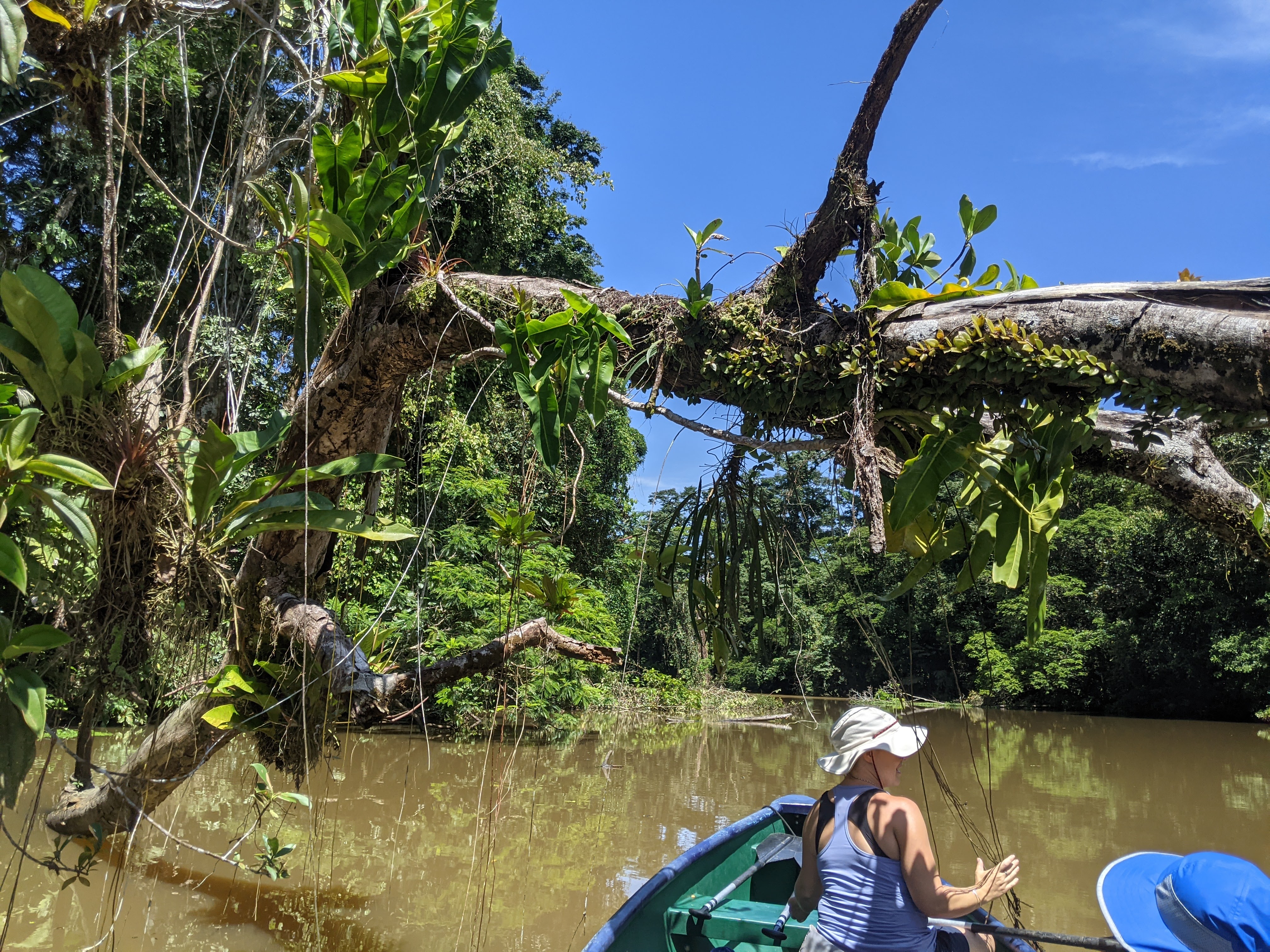
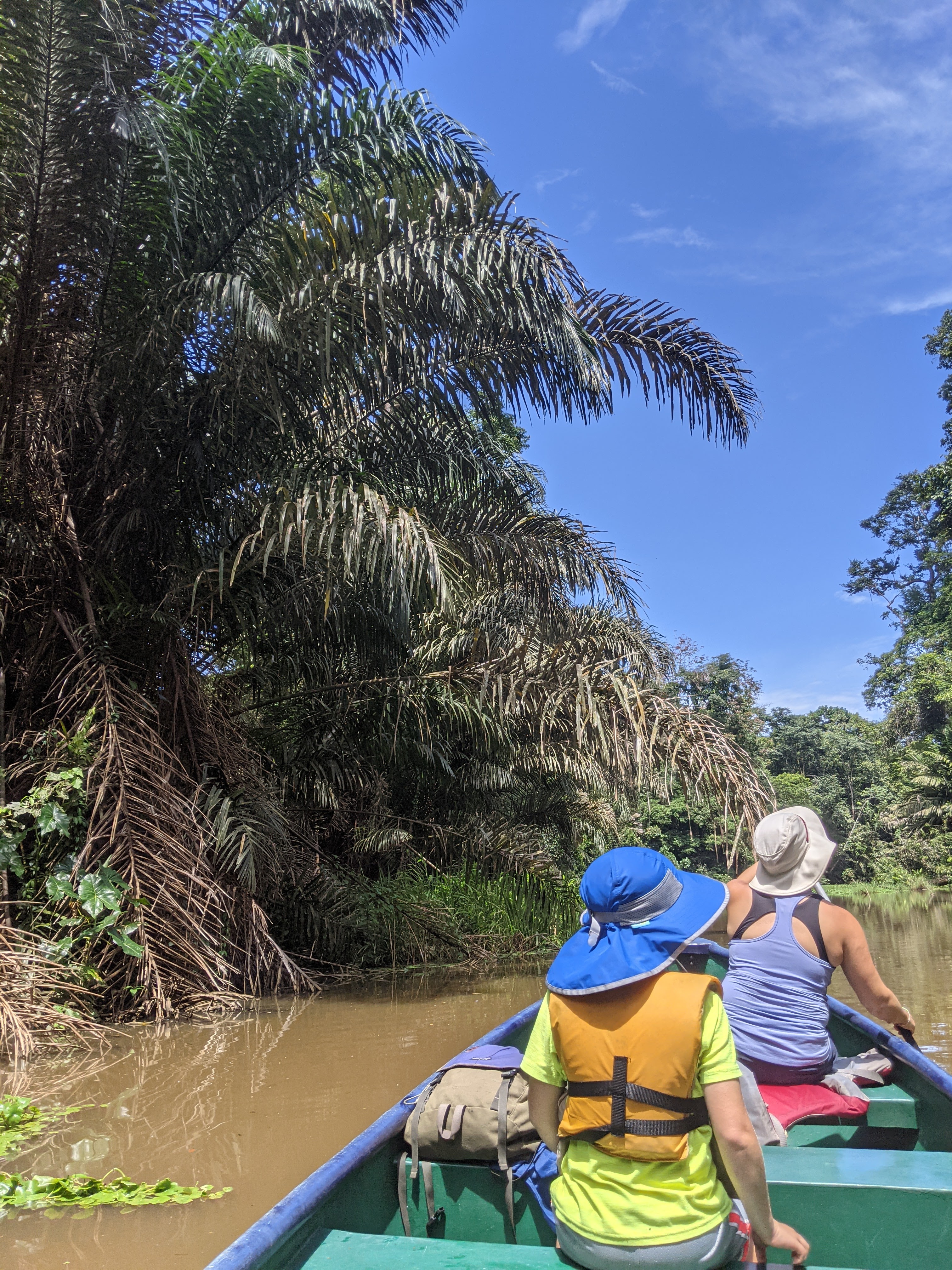
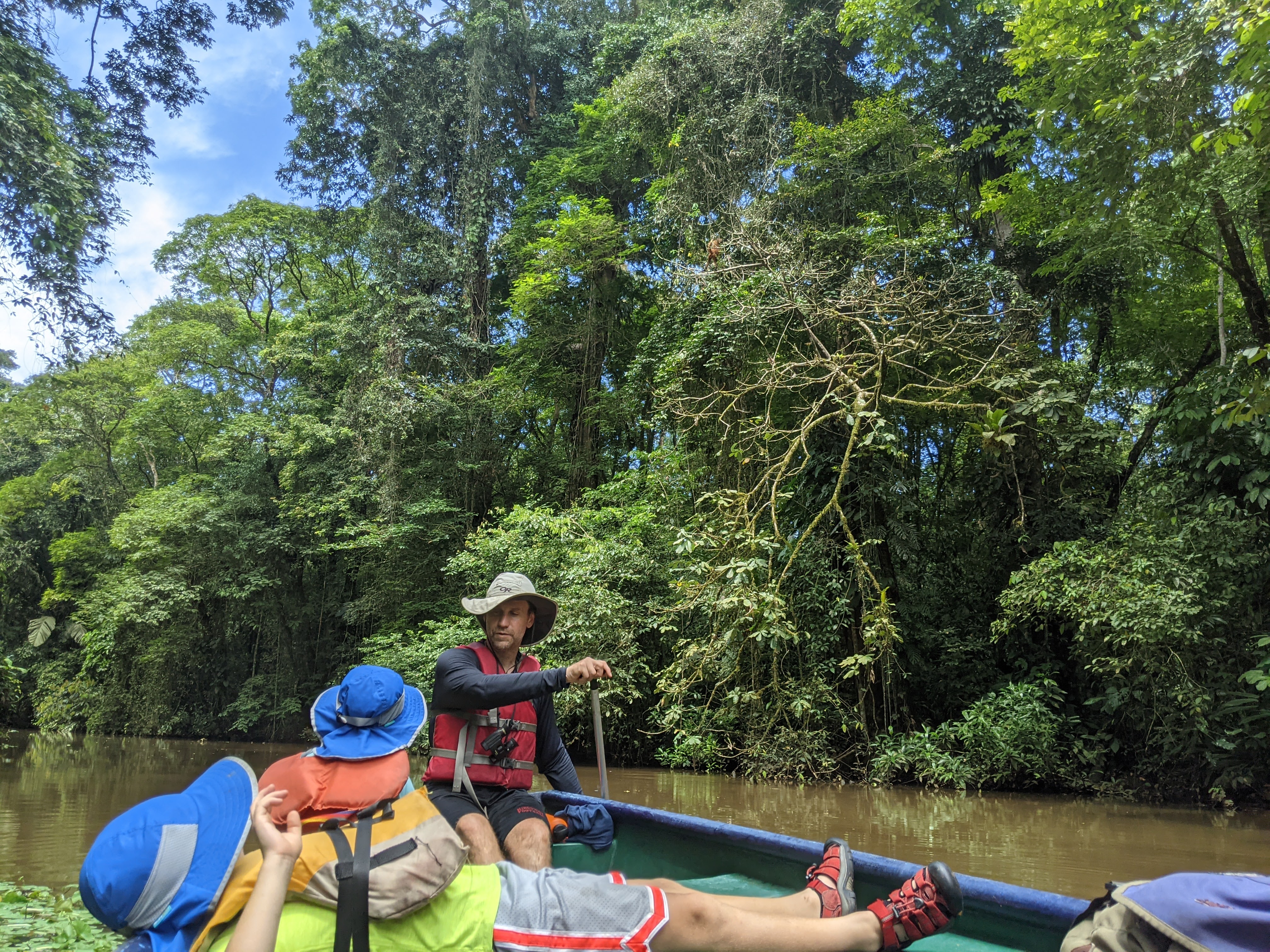
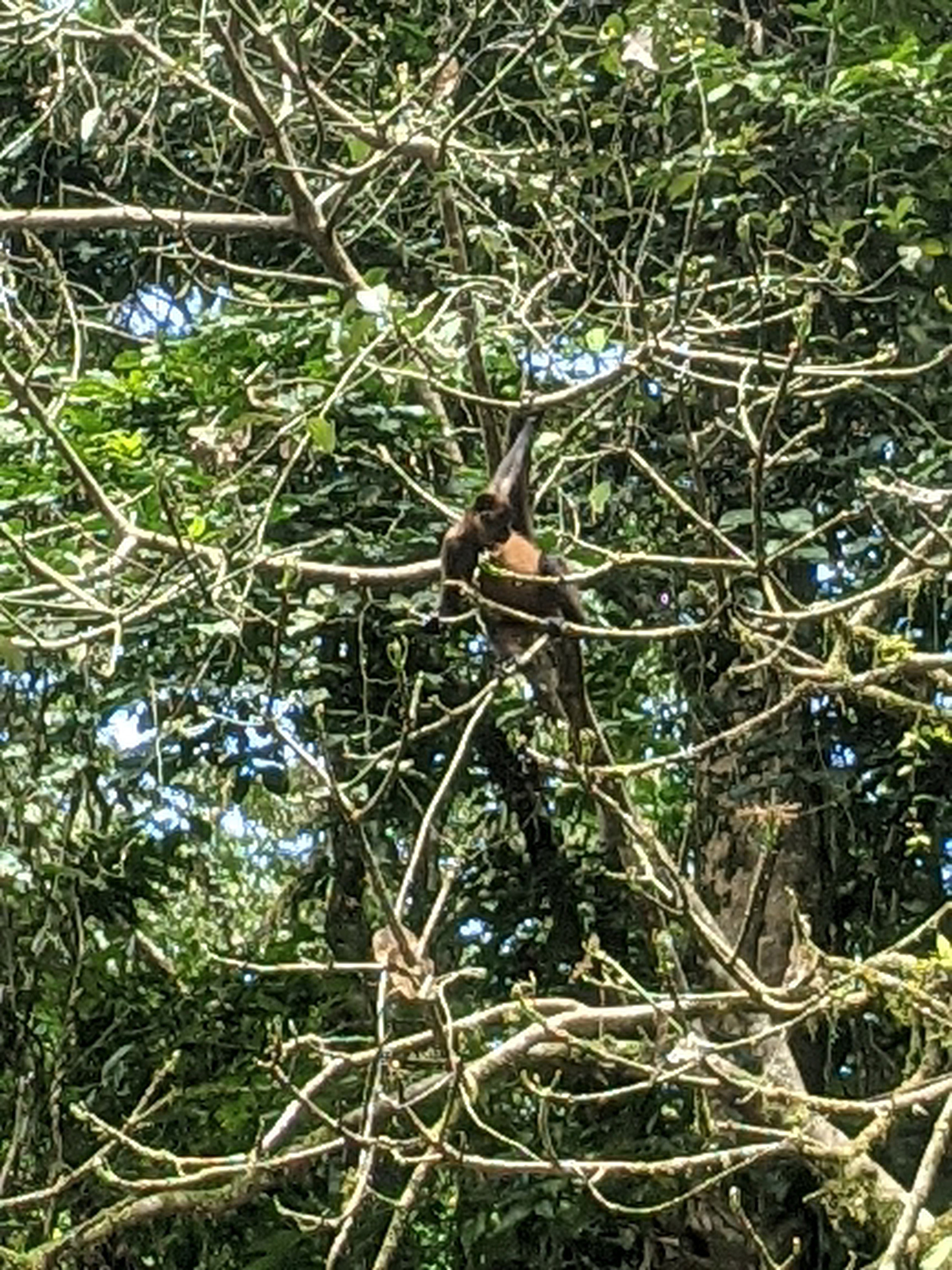
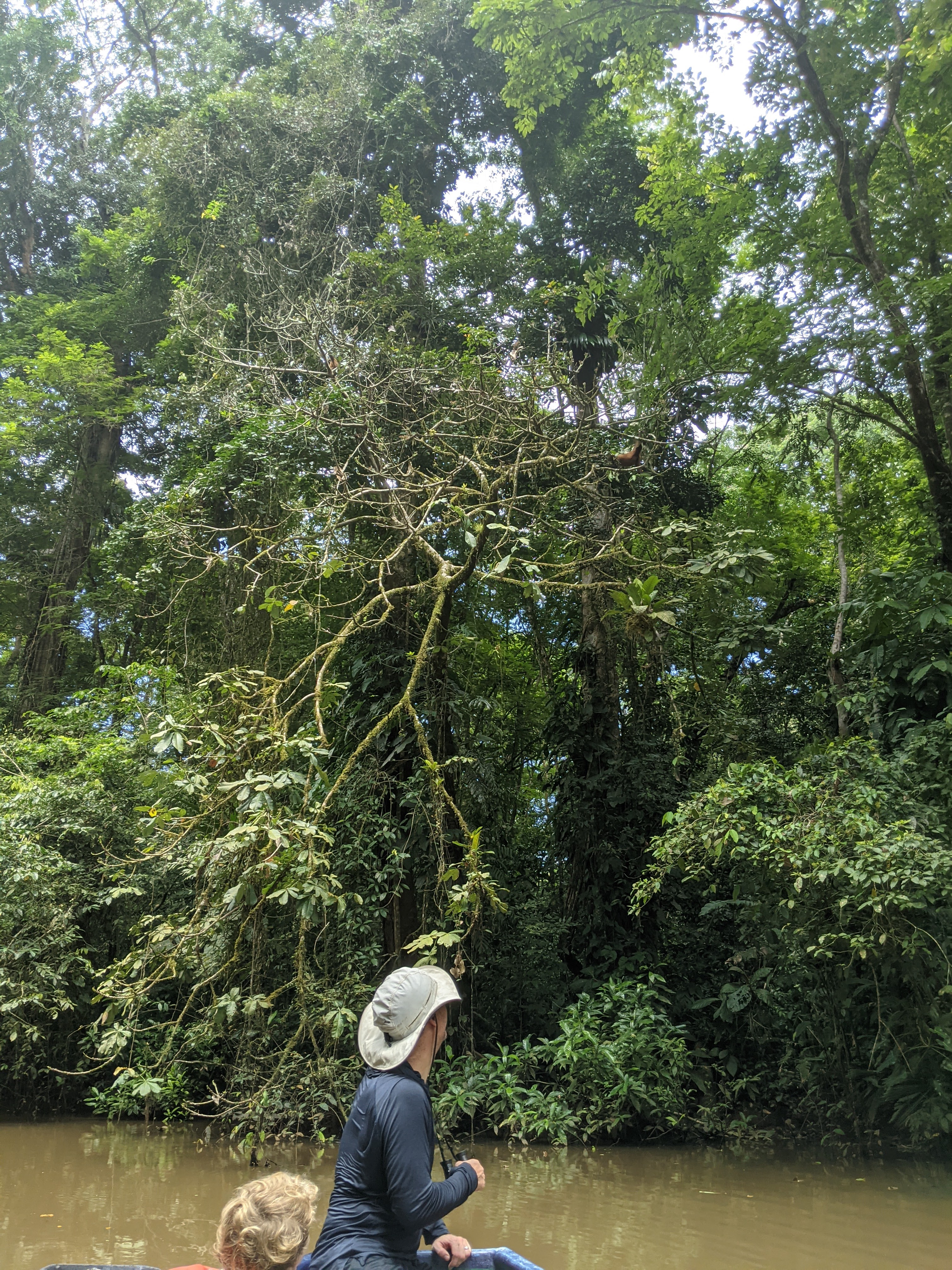
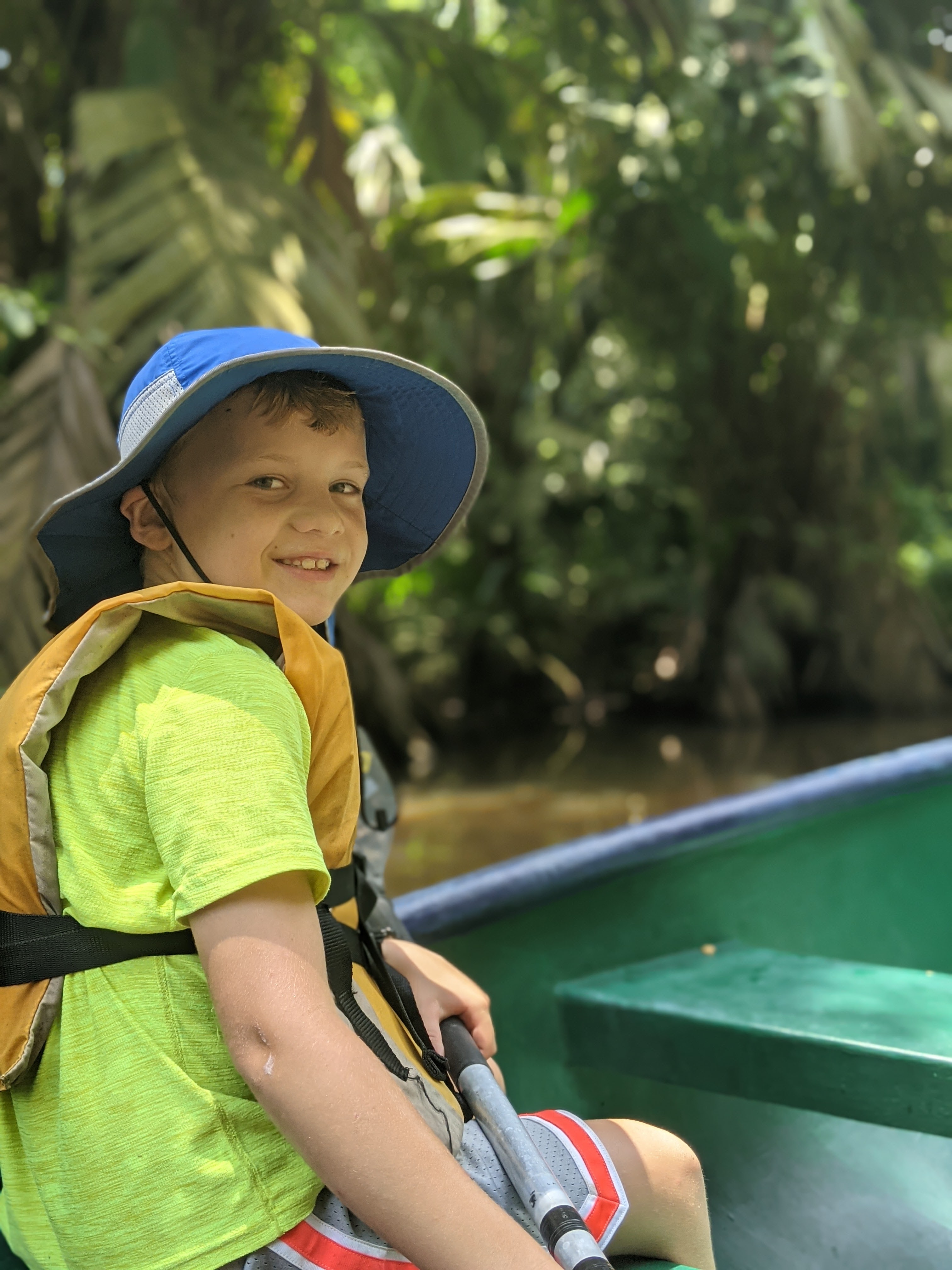
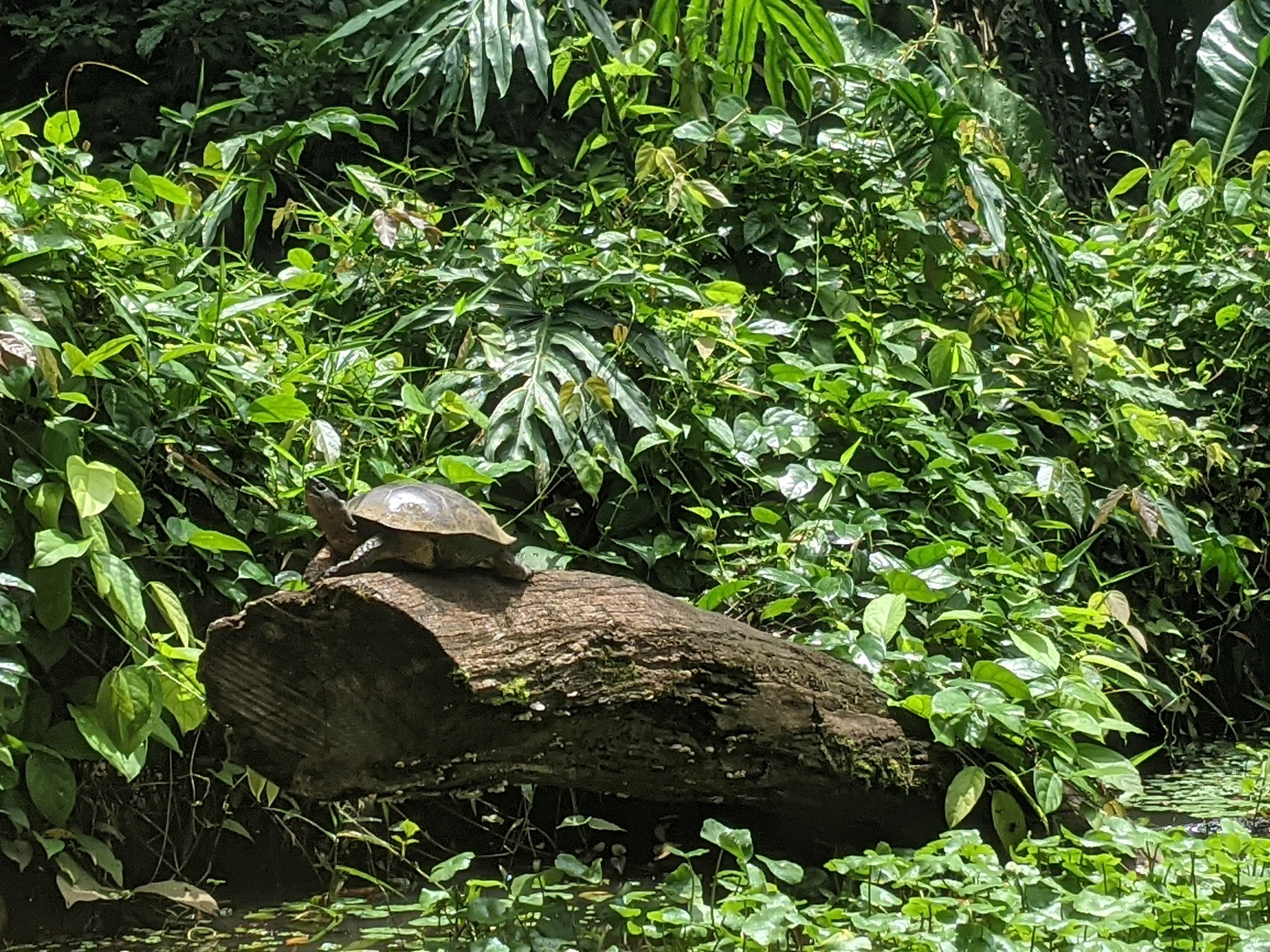
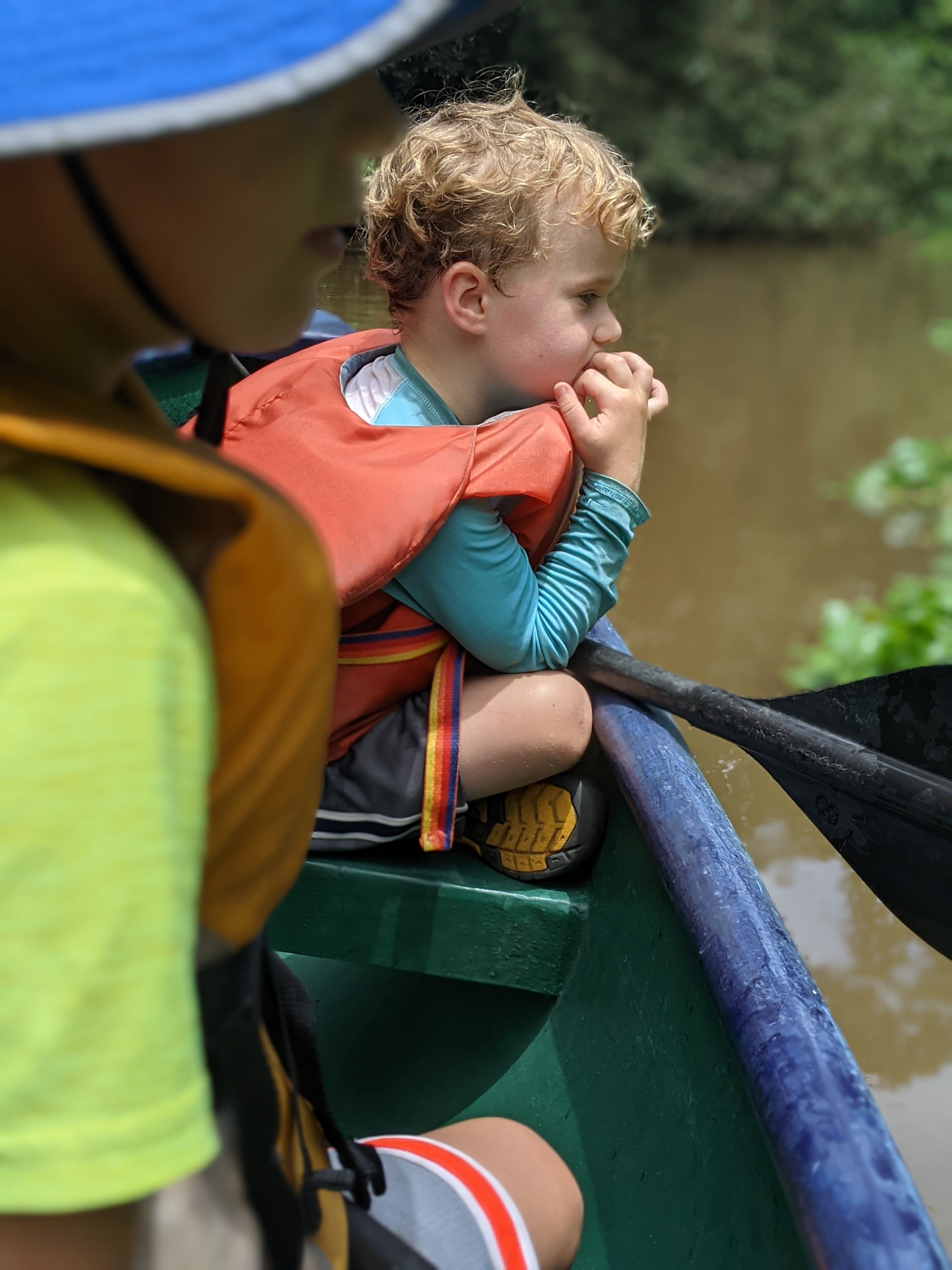
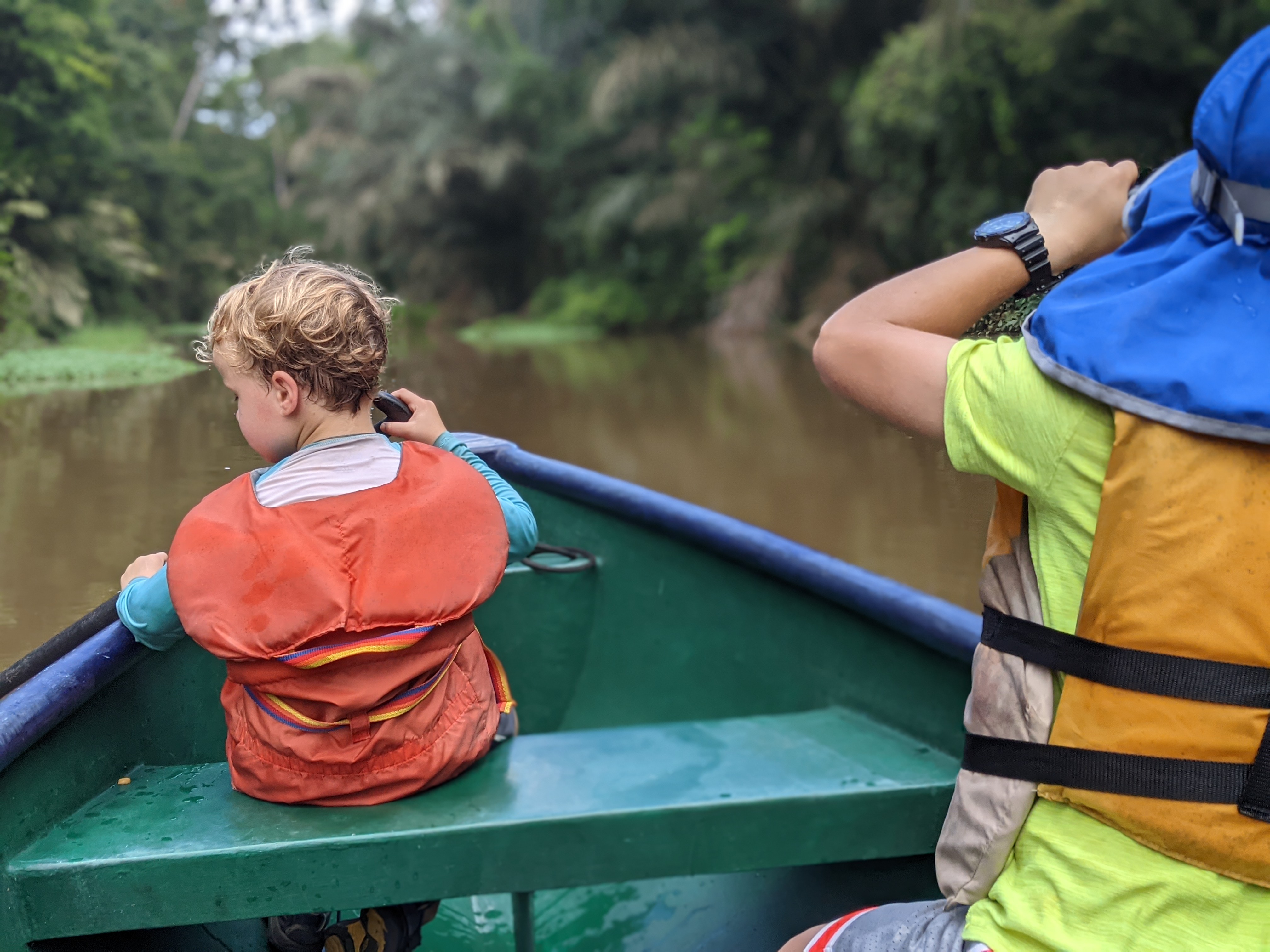
The next day, we rented a canoe and paddled our way through the many canals. We couldn’t believe all of the wildlife that we encountered along the way: enormous, striped iguanas, spider monkeys, and even crocodiles were fully visible from our boat.
Getting off the mountain was fun, but we missed our little community — and the cool air — of Monteverde. And there’s something about traveling when abroad that can shine a light on being a bit homesick, missing friends and family. We are already looking forward to visitors and excuses for more adventures!
 In The Clouds
Sounds amazing, so glad you are able to do some traveling there, and hope your ankle recovers quickly!
LikeLike
Thanks for sharing! Love this.
LikeLike
Love this, Lacey. Can’t wait to get there and join you.
LikeLike
🦉___________________
LikeLike
Wowzers! What a great experience for all of you! And to feel so at home now, that even a short time away to the Caribbean can leave you missing your new home. Great place for a naturalist; I do envy all the animals you’ve seen and interacted with, in some cases. Maybe the boys will become terrariumists when they return to the USA. Keeping Iguanas & Bearded Dragons can be great fun. Sloths might be too complicated! 🦥 We look forward to talking to you in — what? 15 minutes? Till then…
Love, Miriam
LikeLike
I love reading about your adventures!
LikeLike